When planning your next underwater holiday, evaluating liveaboard vs daily diving helps you choose the perfect holiday style. Both options showcase the breathtaking marine life of Egypt, yet they offer completely different daily rhythms. Therefore, choosing between staying on a safari vessel or sleeping in a coastal resort shapes your overall holiday experience. In addition, your dive experience level, travel party, and holiday budget will influence your decision.
Divers often struggle to decide between booking a week at sea or staying ashore. In fact, understanding the core structure of this experience clarifies what kind of adventure awaits you. Daily diving trips depart from the marina each morning and return by late afternoon. Consequently, you can explore premier local reefs and wrecks while still enjoying hotel comfort, seaside restaurants, and family time.
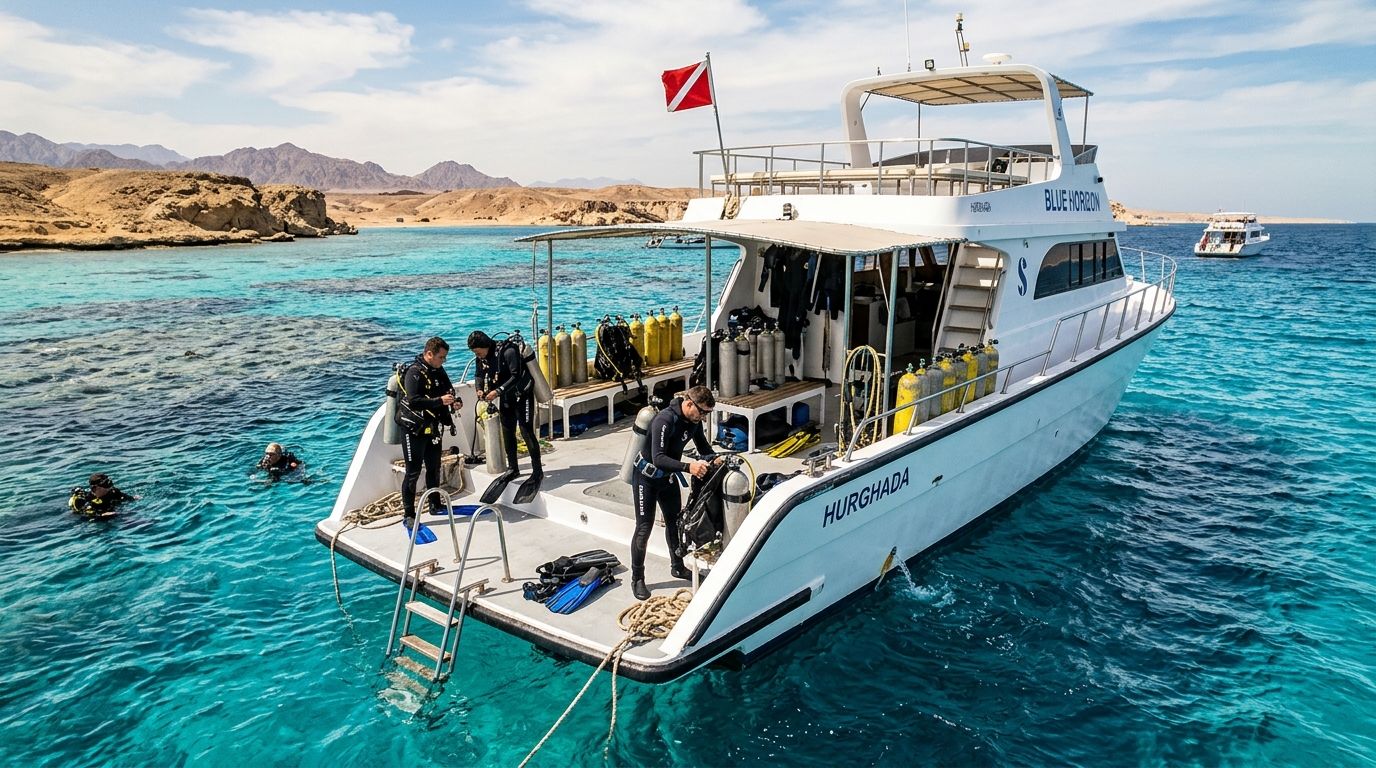
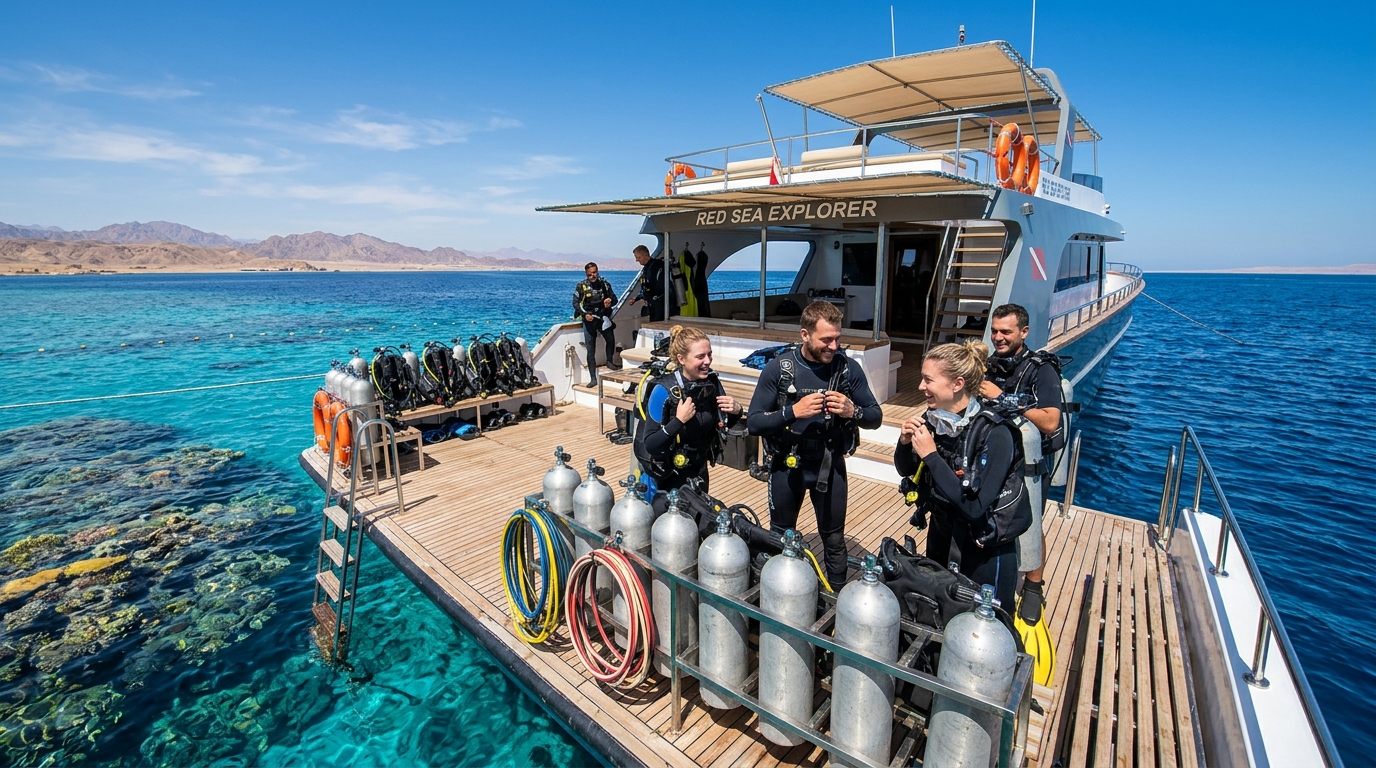
In contrast, a liveaboard vessel acts as your floating hotel for several consecutive nights. Therefore, you wake up right above remote offshore reefs that day boats cannot reach. As a result, you dive up to four times daily, including exhilarating night dives. Understanding scuba diving logistics allows you to evaluate which lifestyle suits your personal goals.
To make an informed decision, you should compare the practical elements of both formats. Specifically, assessing this experience across key criteria prevents holiday surprises.
Your daily routine changes dramatically depending on whether you sleep on water or land. Therefore, analyzing daily schedules reveals how liveaboard vs daily diving impacts your energy levels during the trip.
When you choose day boats, your morning begins with a short transfer from your Hurghada hotel to the dive centre. After checking your kit, the vessel cruises toward stunning coral reefs. In fact, you can discover amazing local sites through Hurghada Boat Diving: Unforgettable Safari or Day Trips. Between dives, you enjoy a freshly prepared buffet lunch on board. Furthermore, you return to shore around 16:00, which leaves your evenings completely free for dining and sightseeing.
Conversely, a liveaboard day begins at sunrise with a light snack and your first dive briefing. Divers jump into pristine waters before other boats even start their engines. In addition, you return to the mother ship for a hearty hot breakfast while the crew relocates the yacht. Consequently, your entire week focuses entirely on diving, eating, and relaxing between surface intervals.
Budgeting accurately requires a realistic look at all holiday expenses. Therefore, analyzing the financial aspect of liveaboard vs daily diving ensures genuine value for money.
A typical daily diving package in Hurghada costs approximately €55 to €75 (£47 to £64) per day for two guided boat dives, lunch, and drinks. Consequently, you must also budget for your hotel accommodation and evening dinners in town. In contrast, a full-board Red Sea liveaboard safari usually ranges from €900 to €1,600 (£770 to £1,370) per week. Moreover, liveaboard packages include your cabin, three to four dives daily, all meals, and transfers. However, safaris often require extra marine park fees and crew tips. For that reason, both options can offer comparable value depending on how many dives you log.
Divers must also evaluate certification minimums and physical stamina when comparing options. In fact, deciding on liveaboard vs daily diving should depend closely on your comfort level underwater.
Day boats cater exceptionally well to beginners, newly certified divers, and families. For example, guests can easily prepare their dive skills with a Scuba Refresher Hurghada: Spectacular Dive Confidence session right off the coast. Furthermore, shallow lagoons and sheltered reef walls offer gentle conditions without strong ocean currents.
On the other hand, remote safari routes demand higher experience. Marine parks such as the Brothers Islands or Daedalus Reef feature sheer drop-offs and strong washing currents. Therefore, reputable operators usually mandate an Advanced Open Water certification and a minimum of 30 logged dives. You can check current safety standards through the National Oceanic and Atmospheric Administration to understand how ocean currents affect offshore marine environments. Additionally, earning specialized certifications through Master the Enriched Air Diver Course for Thrilling Dives improves bottom time significantly on multi-dive days.
Holiday plans often involve partners or family members who do not scuba dive. Therefore, family considerations play a vital role when weighing liveaboard vs daily diving.
If your travel companions prefer swimming pools, beach loungers, or desert quad tours, daily boat diving is the definitive winner. Non-divers can join the day boat for snorkelling or simply stay at a luxury Hurghada resort. Meanwhile, you dive world-class reefs and return ashore every afternoon. In contrast, non-divers on a liveaboard stay confined to the boat for seven days. Consequently, sea conditions or motion sickness can make liveaboards challenging for companions who do not dive.
Ultimately, both holiday styles offer unforgettable underwater moments in Egypt. If your dream holiday centres on total immersion, remote pelagic encounters, and logging 20 or more dives, choose a liveaboard safari. However, if you prefer flexible schedules, diverse dining, hotel comforts, and family activities, daily boat diving provides the ideal balance. Therefore, carefully examine your travel goals, weigh liveaboard vs daily diving, and get ready to experience the magical marine wonders of the Red Sea.