Vibrant coral gardens and legendary shipwrecks make the Red Sea a premier destination for scuba enthusiasts worldwide. However, standard air tables often cut your underwater adventures short. As a result, nitrox diving in hurghada has become the preferred choice for divers wanting longer bottom times. Certified divers gain extra minutes to explore deep pinnacles and fascinating marine ecosystems safely.
Moreover, local dive operations welcome thousands of travelers each year to experience these clear waters. At Golden Star Divers, we guide divers through every stage of their enriched air journey. In fact, learning the science behind gas mixtures unlocks an entirely new perspective on Egyptian diving.
Choosing enriched air fundamentally changes your dive profile and enhances your overall comfort underwater. In addition, nitrox diving in hurghada allows you to absorb significantly less nitrogen during intermediate depths. Consequently, your body experiences less physiological stress across consecutive diving days.
Enriched air replaces a portion of nitrogen with oxygen, usually increasing oxygen content to 32% or 36%. Therefore, your blood absorbs nitrogen at a slower rate than it would with atmospheric air. Furthermore, divers frequently report feeling substantially less fatigued after completing multiple dives. Divers who prioritize wellness rely on safety research from organizations like Divers Alert Network (DAN) to optimize gas management.
Meanwhile, our experienced instructors at Golden Star Divers witness this energy difference every single day. Therefore, choosing nitrox diving in hurghada ensures you stay alert and energized for sunset boat rides.
Standard recreational dive tables impose strict no-decompression limits on popular intermediate depths. For example, diving on standard air at 22 meters limits your bottom time significantly. In contrast, diving with an EANx32 mixture extends that limit by nearly double. Consequently, underwater photographers secure much more time to capture rare marine species without decompression penalties.
Additionally, daily boat safaris often feature two or three distinct immersions. Using enriched air significantly reduces residual nitrogen between stops. Therefore, your subsequent dives offer extended margins of safety and leisure. Check out our comprehensive Scuba Diving Hurghada: The Ultimate Red Sea Guide for more planning insights.
Diving with higher concentrations of oxygen introduces specific physiological boundaries that every diver must respect. Consequently, safe nitrox diving in hurghada demands proper education and diligent dive planning. While enriched air reduces decompression sickness risks, it introduces the critical factor of oxygen toxicity.
Every enriched air cylinder features a precise Maximum Operating Depth (MOD) based on partial pressure limits. For example, diving beyond an oxygen partial pressure of 1.4 atmospheres increases the risk of convulsions. Therefore, you must compute your MOD before entering the water with your buddy. In fact, exceeding this predetermined depth limit endangers your dive profile immediately.
Nevertheless, modern dive computers calculate your oxygen exposure in real time throughout the dive. As a result, monitoring your depth gauge keeps you within strict recreational boundaries comfortably. Review our guide on Enriched Air Nitrox: Amazing Red Sea Diving Secrets to master depth calculations.
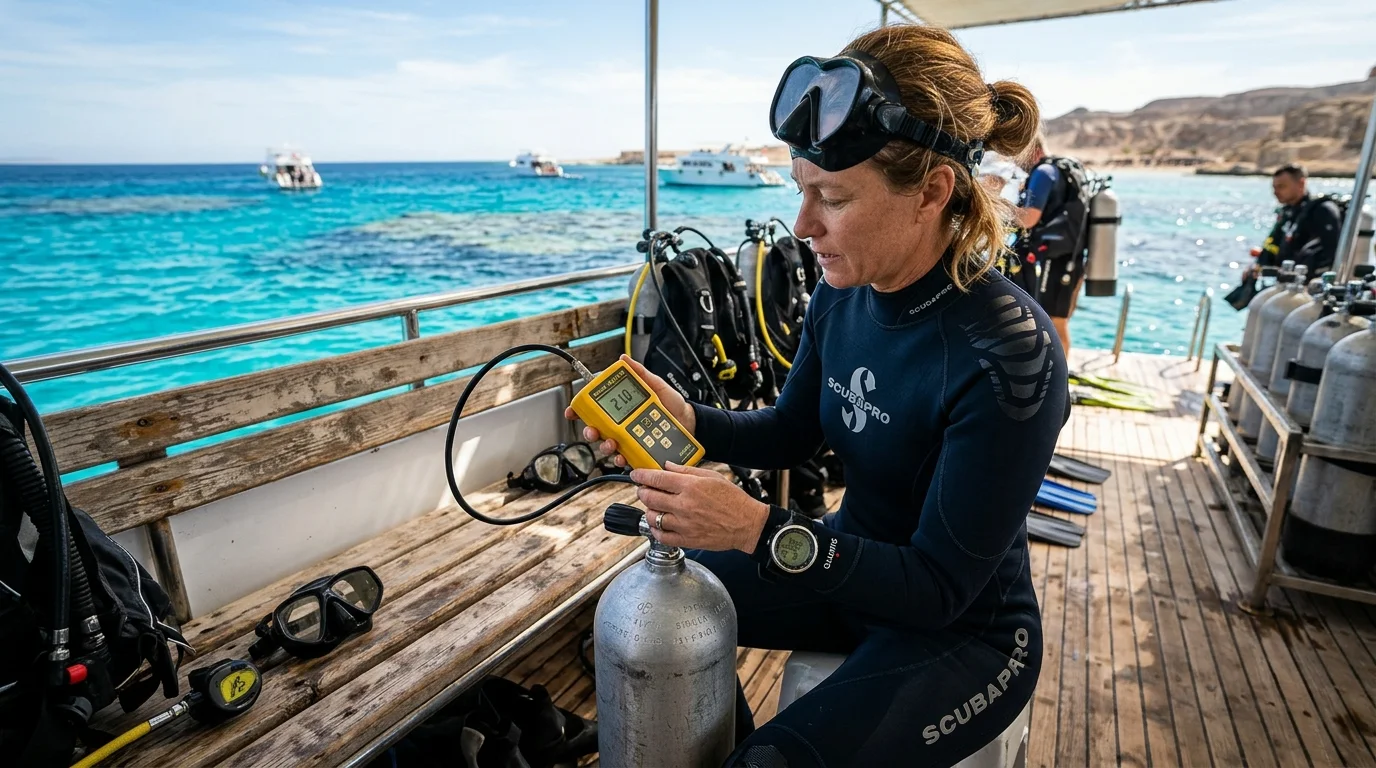
Divers must always analyze their own gas tanks before leaving the dive center or boat deck. In addition, you must verify the exact oxygen percentage using a calibrated oxygen analyzer. Once you confirm the reading, you must log the blend percentage, cylinder pressure, and MOD on the tank tag.
Furthermore, the dive boat manifest requires your physical signature next to your tank specifications. For instance, skipping this analytical verification violates essential international scuba standards. In contrast, completing this routine takes only two minutes and guarantees absolute peace of mind.
Hurghada offers dozens of world-class reef formations and historic wrecks tailor-made for enriched air profiles. Therefore, participating in nitrox diving in hurghada unlocks the true potential of these offshore locations. Extended bottom time allows you to observe schooling pelagics without rushing your ascent.
Deep wrecks require careful gas planning to maximize observation time along the main deck structures. For example, exploring the famous military cargo on the SS Thistlegorm Wreck Diving – Exploring Egypt’s Famous Shipwreck becomes far more rewarding on nitrox. Similarly, the dramatic drop-offs at Carless Reef Diving: Breathtaking Offshore Pinnacles provide unmatched encounters with giant morays and trevallies.
Moreover, these offshore pinnacles sit at depths between 18 and 30 meters where enriched air excels. Consequently, nitrox diving in hurghada allows divers to inspect coral overhangs thoroughly without immediate decompression stress. In fact, pelagic hunters often cruise past these outer walls during optimal currents.
Wall diving along the eastern coast of Giftun Island offers spectacular scenery and sweeping ocean currents. However, swimming against deep thermoclines on air limits your bottom profile substantially. In contrast, using a 32% oxygen blend lets you cruise leisurely alongside gorgonian fans and soft corals.
Additionally, our dive masters guide you along pristine wall contours while tracking gas limits closely. As a result, you observe hawksbill turtles and reef sharks resting inside natural caverns. Therefore, planning consecutive wall dives on enriched air optimizes both safety and visual enjoyment.
Divers need specialized gear knowledge before embarking on an enriched air journey. Fortunately, regular recreational scuba equipment works seamlessly with standard gas blends up to 40% oxygen. Nevertheless, practicing safe nitrox diving in hurghada requires attention to specific equipment settings and maintenance standards.
Most modern regulator systems come factory-cleaned and certified for recreational nitrox mixtures straight off the shelf. However, you must calibrate your digital dive computer before entering the water. Furthermore, failing to switch your computer to the correct oxygen percentage causes false decompression warnings.
Additionally, dive computers require inputting both the oxygen fraction and maximum partial pressure limit. In fact, many models sound audible alarms if you approach your calculated maximum depth. To learn more about selecting reliable dive gear, read our overview on How to Choose the Right Diving Equipment in Hurghada.
Earning your enriched air certification represents one of the fastest and most practical scuba investments. Moreover, beginners and seasoned veterans alike can integrate the training into regular day trips smoothly. Consequently, starting your journey into nitrox diving in hurghada requires minimal classroom hours and zero mandatory exam stress.
The specialty course focuses heavily on dry skill development, gas analysis, and dive computer programming. Therefore, you can complete independent digital learning prior to arriving in sunny Egypt. Once you board our spacious vessel, our certified instructors teach you how to analyze real gas cylinders.
Finally, you apply this knowledge directly across two scheduled recreational ocean dives. As a result, you earn an internationally recognized specialty certification while exploring spectacular coral gardens. Contact Golden Star Divers today to schedule your enriched air adventure in the Red Sea.
No, nitrox actually limits your maximum depth due to oxygen toxicity risks. However, it significantly extends your allowable bottom time at moderate depths between 18 and 30 meters.
Standard recreational regulators and BCDs are compatible with recreational blends up to 40% oxygen. However, you will need a nitrox-programmable dive computer and an oxygen analyzer.
Yes, the Enriched Air Diver course can easily be completed in just one day alongside your normal daily diving boat trips with Golden Star Divers.
Because nitrox reduces the amount of nitrogen your tissues absorb during a dive, many divers report experiencing significantly less post-dive fatigue, especially during multi-dive days.