Nitrox diving in Hurghada gives divers longer bottom times and shorter surface intervals across Egypt’s most famous reefs. Breathing enriched air reduces nitrogen absorption during deep or repetitive profiles. At Golden Star Divers, located directly in the heart of Hurghada, our dive teams prepare divers to explore the Red Sea safely with certified enriched air fills.
Standard compressed air contains roughly 21 percent oxygen and 78 percent nitrogen. Enriched air Nitrox, often called EANx, raises oxygen levels from 28 to 40 percent. By lowering the nitrogen fraction, you reduce nitrogen uptake in your tissues. This physiological advantage makes Nitrox diving in Hurghada a prime choice for busy multi-dive vacations.
Divers often complete two or three dives a day from local day boats. Standard air limits bottom time on the second and third descents. Breathing enriched air provides significantly more allowable time at depths between 18 and 30 meters. This safety buffer helps you enjoy marine life without rushing your ascent.
Taking advantage of Nitrox diving in Hurghada offers practical rewards for both recreational and experienced divers. When you plan continuous dive days, managing fatigue and no-decompression limits becomes essential.
The primary benefit of enriched air is extended no-decompression time (NDL). For example, at 22 meters on regular air, your limit sits around 37 minutes. Using an EANx32 mix extends that limit to nearly an hour. Divers exploring historic shipwrecks or steep drop-offs gain substantial observation time before needing to ascend.
Many divers report feeling much less tired after multiple dives on enriched air. While scientific discussions continue regarding nitrogen fatigue, real-world experience shows positive results. Less nitrogen stress on your circulatory system keeps your energy levels higher throughout a packed week of Red Sea adventures.
Because your body absorbs less nitrogen on each descent, it eliminates accumulated gas faster between dives. This efficiency proves helpful during full-day boat excursions. Exploring sites like Giftun Island diving becomes far more relaxing when surface intervals do not compromise your afternoon dive schedule.
Enriched air provides immense benefits, but it also demands strict attention to depth management. Practicing safe Nitrox diving in Hurghada requires you to monitor oxygen exposure and adhere to strict mathematical rules.
Every Nitrox mixture carries a Maximum Operating Depth (MOD). Higher oxygen concentrations increase the risk of central nervous system (CNS) oxygen toxicity if you exceed safe partial pressures. The recreational diving standard caps oxygen partial pressure at 1.4 atmospheres during normal conditions. For instance, EANx32 carries a hard depth limit of 33.8 meters.
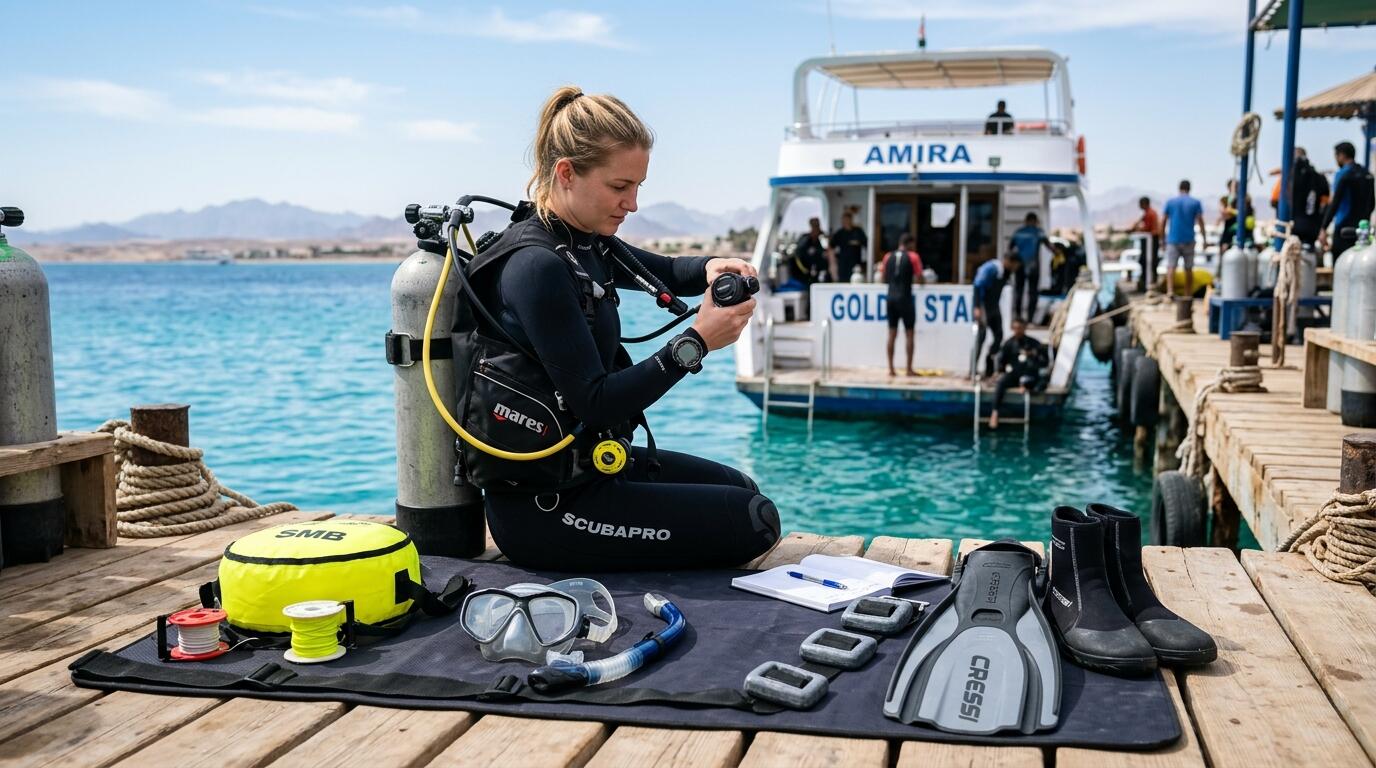
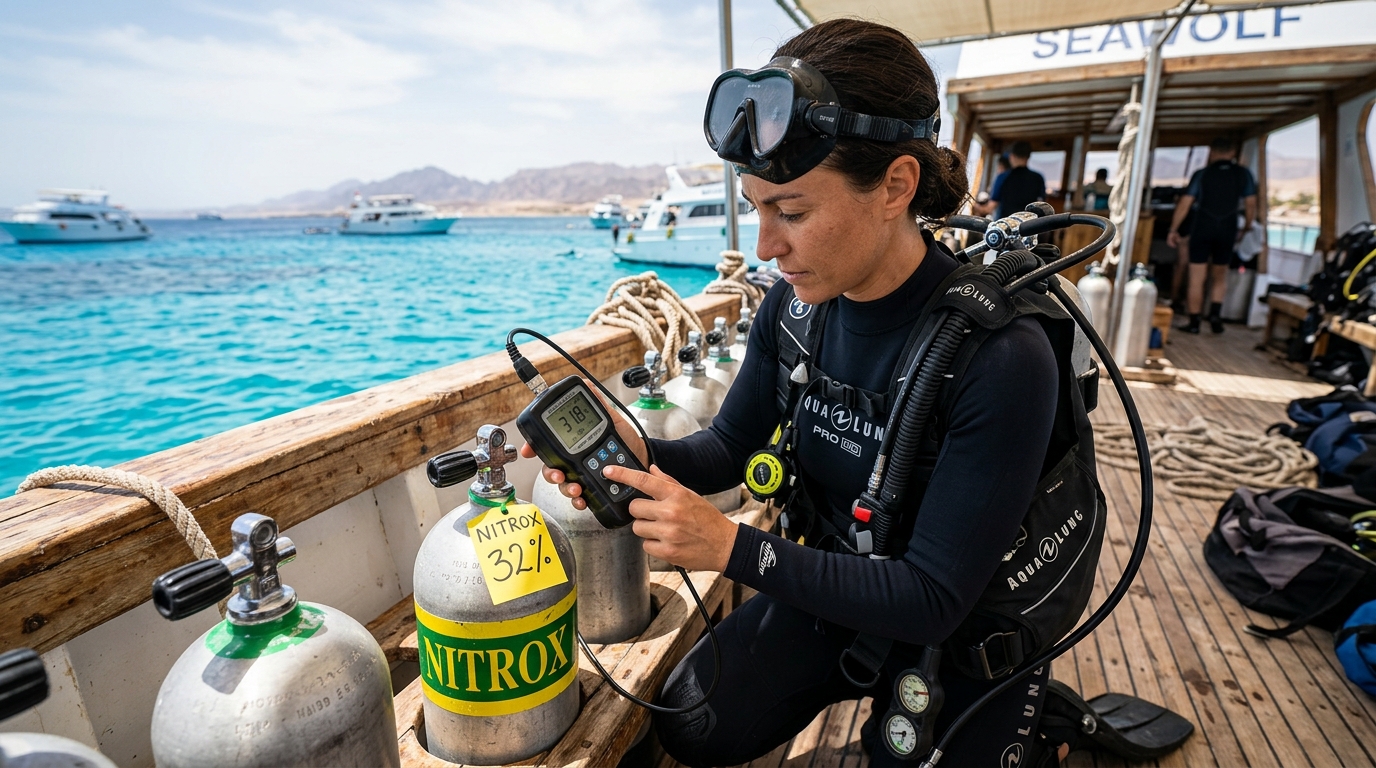
Never breathe from a gas cylinder without analyzing it personally. At Golden Star Divers, our crew provides calibrated oxygen analyzers for every diver. You check the oxygen percentage, note the MOD on the cylinder sticker, and sign the fill log before boarding. This step remains mandatory on every single excursion.
Your dive computer requires exact gas data to calculate your profile accurately. Before entering the water, program the oxygen percentage matching your analysis. Forgetting to update your settings can cause premature dive locks or inaccurate decompression predictions during deep profiles.
Certain Red Sea underwater locations showcase the true power of enriched air. These medium-depth plateaus and coral pinnacles align perfectly with standard EANx32 and EANx36 blends.
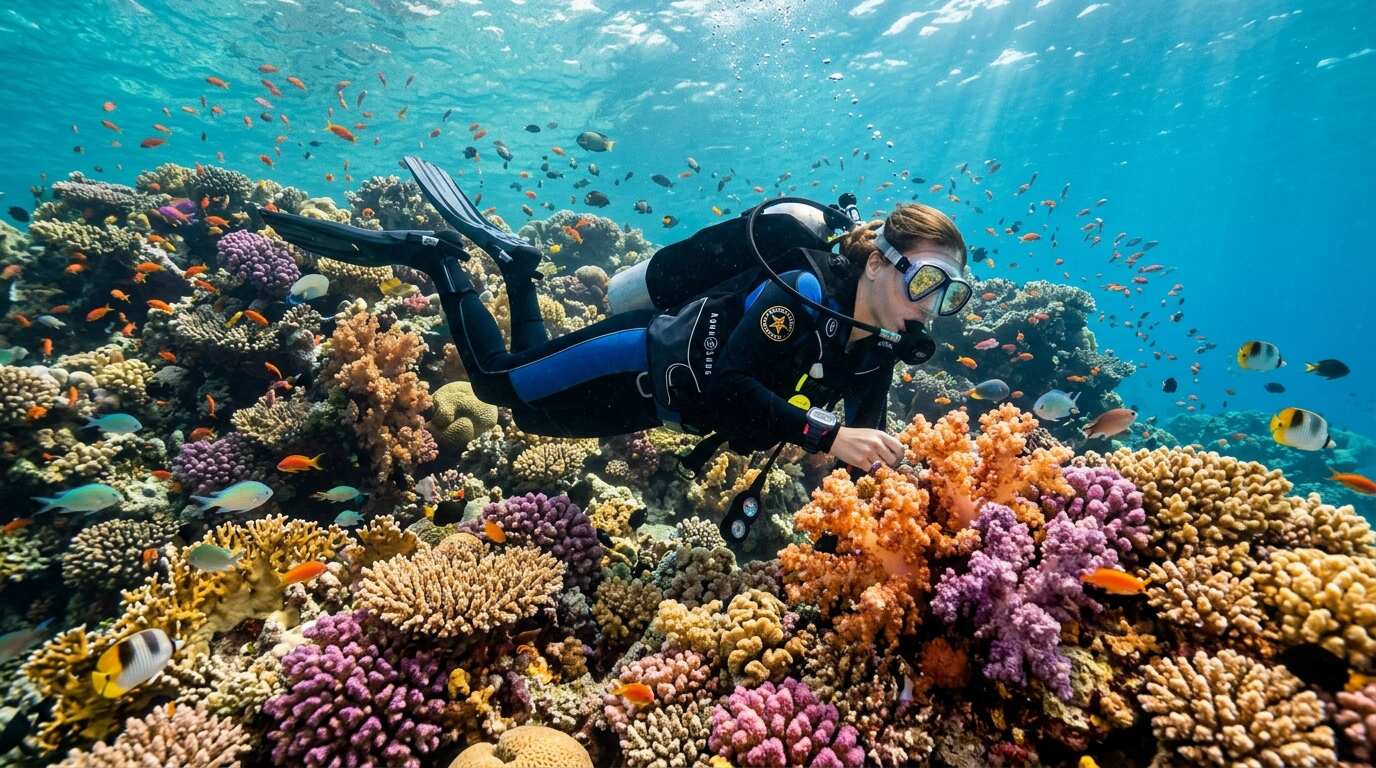
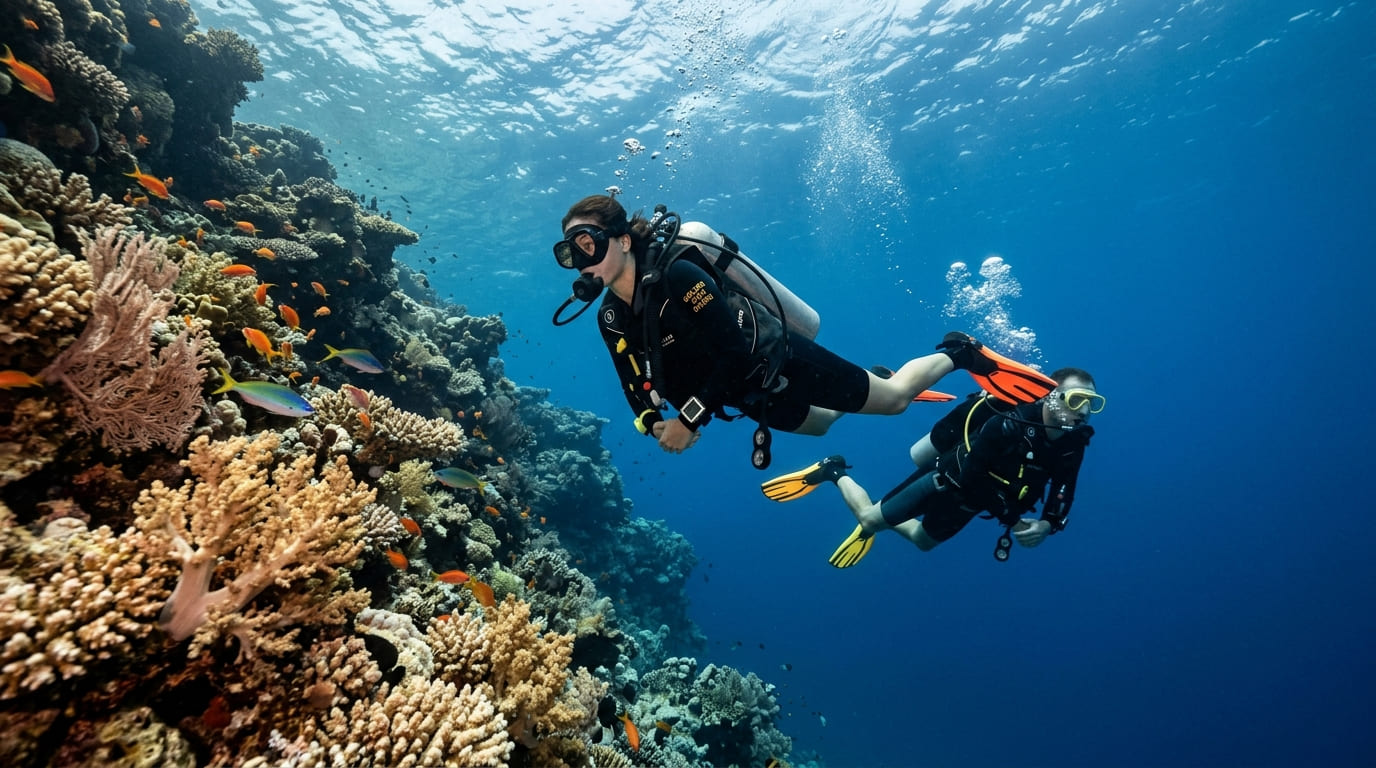
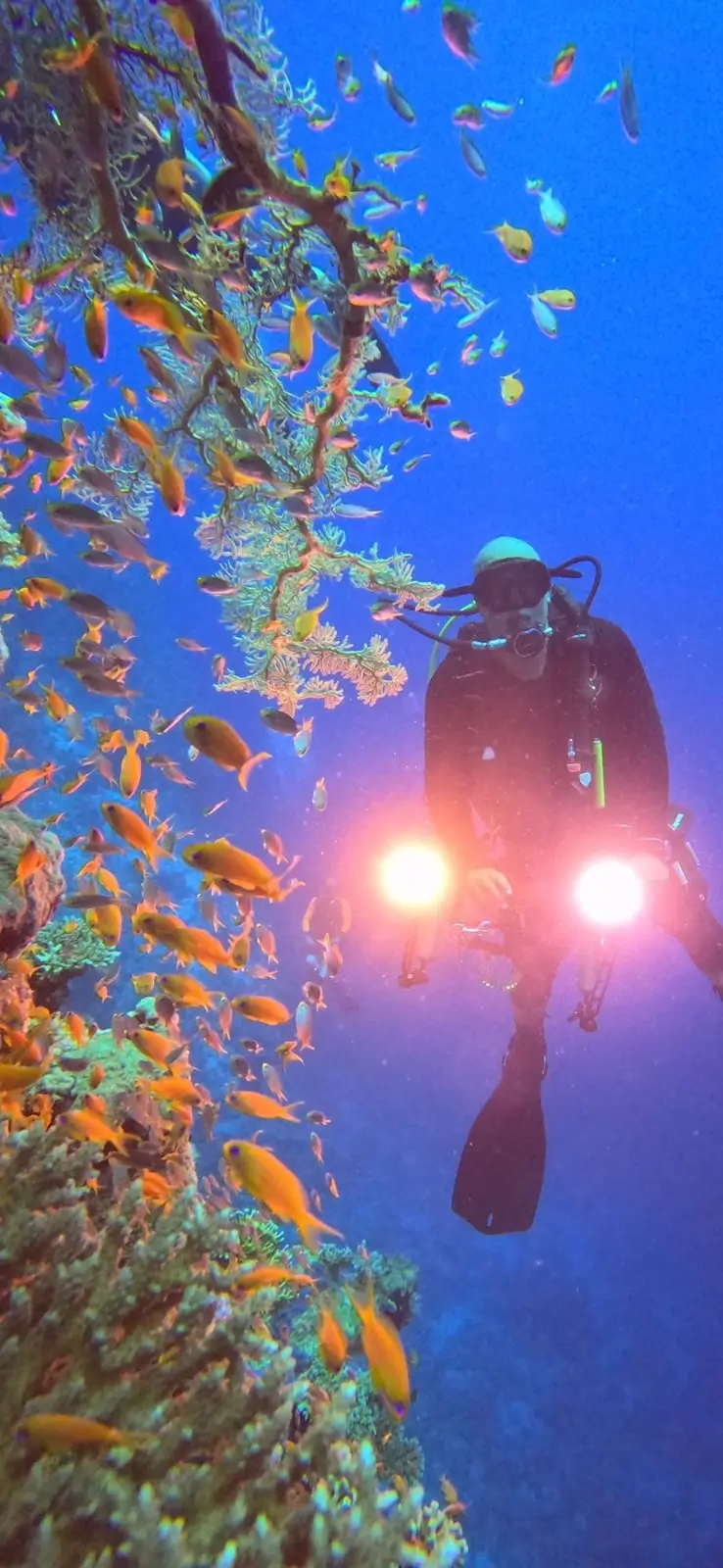
The southern reefs near Hurghada offer exceptional drift dives along plunging drop-offs. Sites such as Abu Ramada Reef present dramatic walls covered in gorgonian fans between 20 and 30 meters. Performing Nitrox diving in Hurghada across these walls lets you watch pelagic fish without losing valuable minutes to rapid nitrogen buildup.
A day trip northward brings divers to the ship graveyard of Shaab Abu Nuhas. Classic shipwrecks like the Giannis D and the Carnatic sit between 15 and 27 meters. Taking enriched air on an Abu Nuhas wreck diving trip delivers the extra bottom time required to inspect hulls, cargo holds, and engine rooms safely.
Shallower pinnacles and sandy lagoons also welcome enriched air users. Visiting areas such as Marsa Abu Galawa ensures you maintain wide safety buffers when making second or third afternoon dives. You can linger with stingrays and moray eels while staying well inside conservative safety margins.
You must hold an Enriched Air Diver certification to rent or dive with Nitrox cylinders. The training course is straightforward, dry, and highly informative. You can complete the academic study quickly during your holiday with Golden Star Divers. Nitrox diving in Hurghada is worth considering here — here is what you need to know.
During your training, you will master oxygen exposure calculations, equivalent air depth concepts, and proper tank labeling. Enrolling in PADI dive courses in Hurghada equips you with permanent credentials recognized at dive centers worldwide. Many divers combine this specialty with the Advanced Open Water Diver course to maximize their underwater time.
Pairing gas management knowledge with refined buoyancy improves gas consumption significantly. Divers who master buoyancy control preserve their air supply, allowing the extended NDL of enriched air to provide its full advantage.
Ready to upgrade your diving skills? Nitrox diving in Hurghada unlocks the best underwater plateaus and historical wrecks without conservative air restrictions. Book your enriched air package with Golden Star Divers today and enjoy safer, longer, and more rewarding Red Sea dives.